For the party, this Court is sealed until all seven books are finished. You may read ahead as GM. Do not run it at the table yet.
SotM-8 · Pathfinder 2e
The Name You Will Not Speak
Book 8 of Sins of the Mirror — The Master of Sins
5–8 sessions · 3-level finale at current APL
 123
123The Unwritten Court
- 1. The door (A1) — Already a little open.
- 2. The rooms (A2) — Only the echoes they made.
- 3. The last room (B1, C2) — A chair, not a throne.
Adventure background
Do not open this Court until seven seals are broken. If the party tries early, the Grey Roads loop them to Ashenmere with the iron band short a mark.
You cannot kill sin as an external enemy. The Master is the part of a person that, having looked inward, decides that what they saw is all they will ever be. The seven Courts were an argument. This is the rebuttal — or the agreement.
There are still no literal mirrors. The Unwritten Court is built from their unresolved choices, not from glass.
Faces of the Court
Show these at the table. The Court has faces; use them.
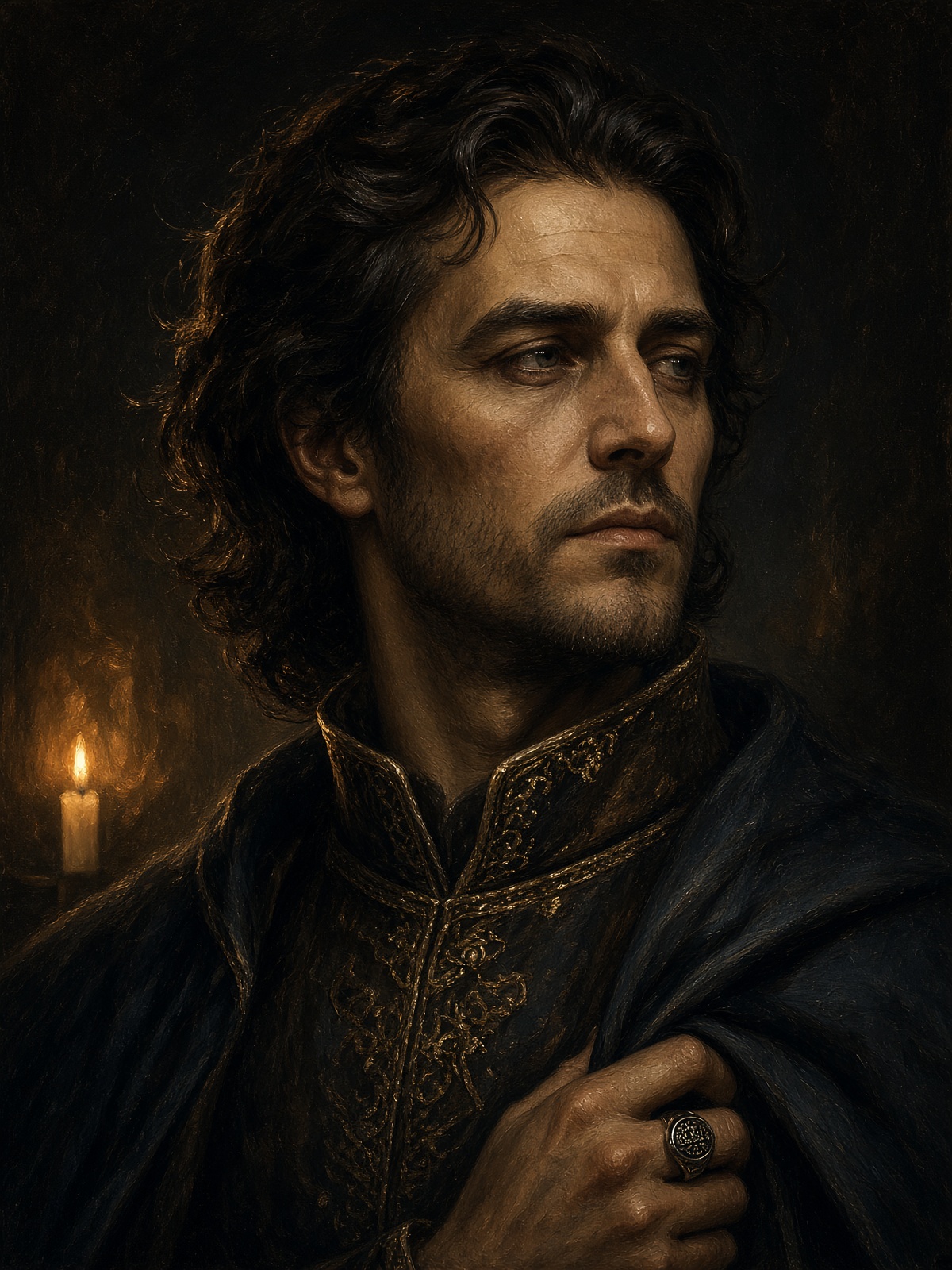
The Master of Sins
Oris of Ashenmere
Wants. A world that stops lying about its saints.
Lever. They are often right. They are wrong that a throne follows. Argue the ending, not the diagnosis.
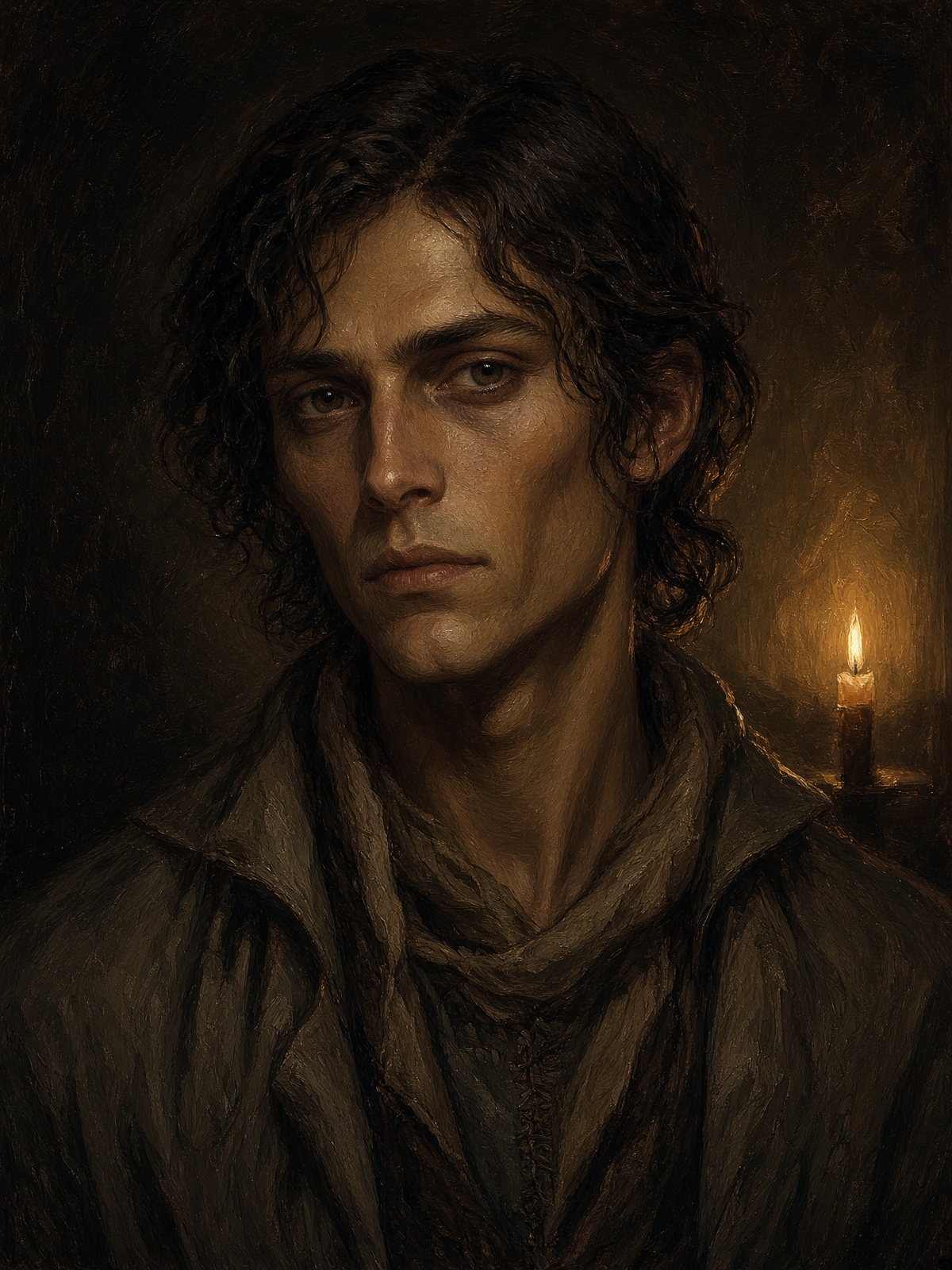
A regard
The first face, grown
Wants. To be answered without being used as a child or a god.
Lever. Kindness is remembered. Harm simply relocates them.
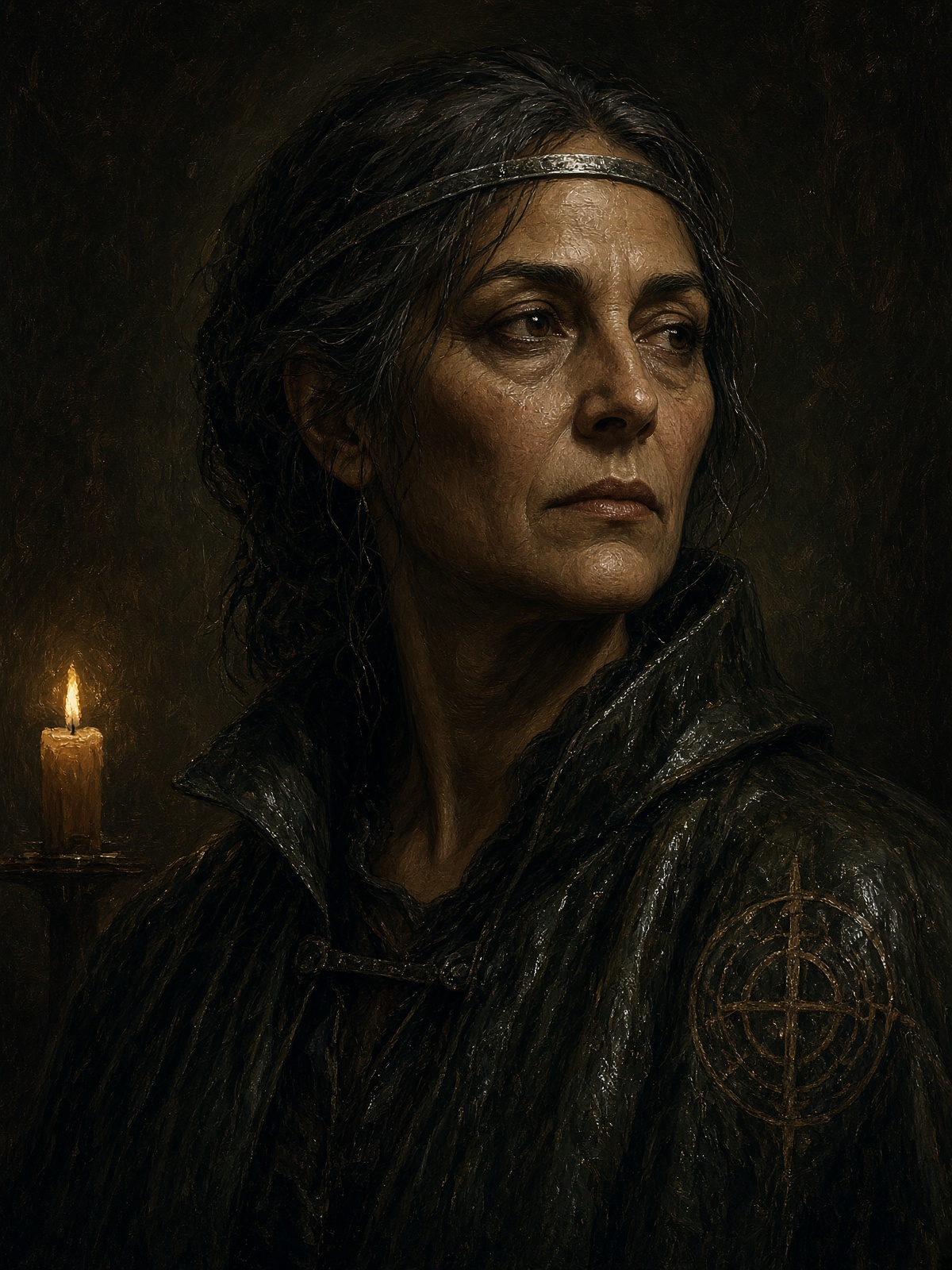
If she walked this far
Maera of the Last Seal
Wants. Not to be asked to be wise. To see if anyone else puts the blade down.
Lever. She will not enter first. After, she will sit.
Synopsis
When the seventh seal breaks, the iron band grows a door in a quiet place. Beyond it: rooms made of titles, purchases, vows, envied lives, hungers, slights, and postponed gestures. The first face is the Child grown — a regard, not a child. Oris of Ashenmere waits in the last room: the first mortal to complete the looking and then flinch into a colder honesty.
They are often right about the party’s hypocrisies. They are wrong about the ending. Become the new Master, unmake the Courts, remain unfinished on purpose, or fail.
Getting started
Run this book at the APL and player count on Your Table. Every DC, creature, gold piece, and XP award on this page is already filled for that table.
Suggested pacing: level once in the middle of Part 2 and once when the seal breaks. Listed XP is Pathfinder 2e per-PC encounter XP (a moderate fight is 80 XP each, not divided).
Do not skip the Inward Gaze at the climax. If you are short on time, cut a fight, not the looking.
This book is three levels if Reckoned or Claimed, two if Bloodied. Use the echoes you actually recorded. Do not invent sins the table did not commit.
Never harm the first face for cheap horror. If attacked, they are simply elsewhere.
Treasure this book (~2 levels): 110 gp for the table
Permanent items: one item of level 1, one of level 1, 4 consumables of level 1
A
Part 1: The rooms you made
Seven rooms. Seven echoes. No glass.
A1. The door
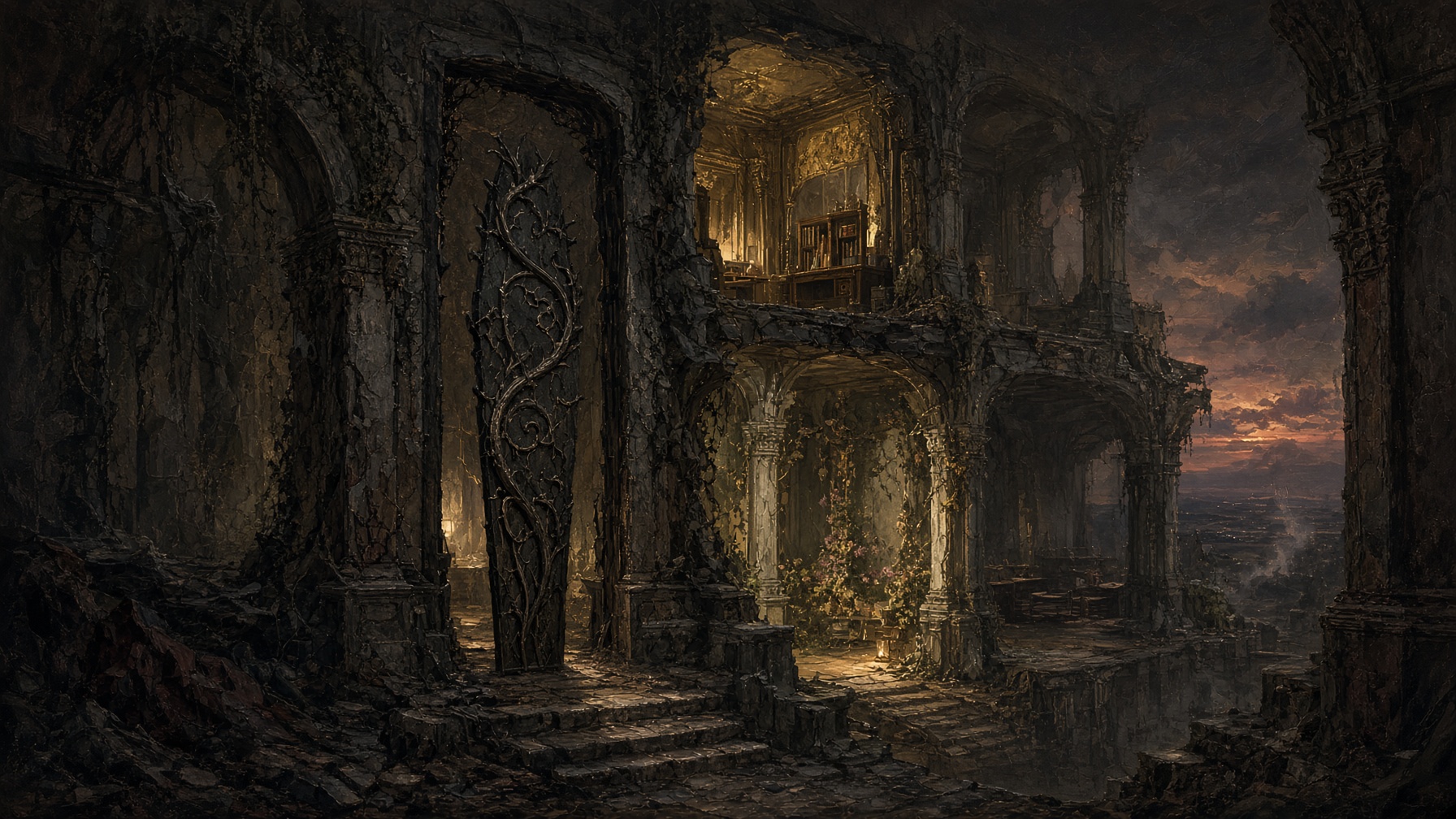
In a quiet place the iron band grows a door. Not a metaphor. Thin, dark, and already a little open, as if waiting had been the lock.
Maera, if alive, will not enter first. Calder will try to map it and fail, happily.
A2. Seven rooms
Walk only the echoes they actually made. Skip a room if that Court was Unfinished — it is a locked alcove, which should itch.
Each room has a lieutenant wearing a title, purchase, vow, slight, hunger, comparison, or unsent letter.
A lieutenant made of a choice
moderate · 80 XP each
Do not run seven boss fights. Run two or three hard rooms and the rest as social Gazes.
Pride-guard × 3
standard 0
Humanoid, Completeness
- AC
- 15
- HP
- 17
- Perc
- +6
- Fort
- +9
- Ref
- +6
- Will
- +3
Melee Strike +6, Damage 1d6+2
Ability DC 17
Unfinished name × 3
standard 0
Incorporeal
- AC
- 15
- HP
- 17
- Perc
- +6
- Fort
- +6
- Ref
- +3
- Will
- +9
Melee Strike +6, Damage 1d6+2
Ability DC 17
Treasure (standard): 14 gp.
A3. The first face, grown
The Nameless Child is not a child here. They are a regard wearing an adult face. They ask a question that is too old, using a name a PC would not burn.
B
Part 2: Oris, still a person
A debate that can become a fight if someone reaches for a throne.
B1. The last room
Seven unfinished objects on pedestals. A chair, not a throne. Oris looks like a teacher you almost remember. They are kind. The kindness is a verdict.
Let them be right for a page. Then ask what ending follows. They want a world honest about its sins more than a world that lies about its saints.
- DC 20 (very hard) — The relevant Lore to disagree without performing virtue
B2. The offered crown
Each PC is offered a throne in the domain of the sin they most refused to name. Claimed boons turn inside out. Bloodied parties get fewer words and more steel.
If someone reaches
severe · 120 XP each
This fight is optional. Talking past it is Reckoned-shaped.
Throne-thing
elite 3
Construct
- AC
- 21
- HP
- 54
- Perc
- +12
- Fort
- +9
- Ref
- +6
- Will
- +12
Melee Strike +15, Damage 1d12+8
Ability DC 22
Claimed boon, inverted × 2
standard 1
Incorporeal
- AC
- 17
- HP
- 23
- Perc
- +7
- Fort
- +7
- Ref
- +4
- Will
- +10
Melee Strike +9, Damage 1d8+4
Ability DC 17
Only if they Claimed that Court. Otherwise omit.
C
Part 3: Cell or starting point
New Master, Unmaking, Unfinished Vow, or failure.
C1. The four endings, named
New Master: someone sits. The Courts become honest and crueler. Seal of the campaign closes on a coronation.
Unmaking: the Courts fall. The land is ordinary and the looking is each person’s problem again.
Unfinished Vow: they refuse both throne and unmaking. They remain unfinished on purpose. Oris calls this impossible. Let it be possible anyway.
Failure: they agree that what they saw is all they will ever be. The door opens outward onto a smaller world.
C2. Oris of Ashenmere
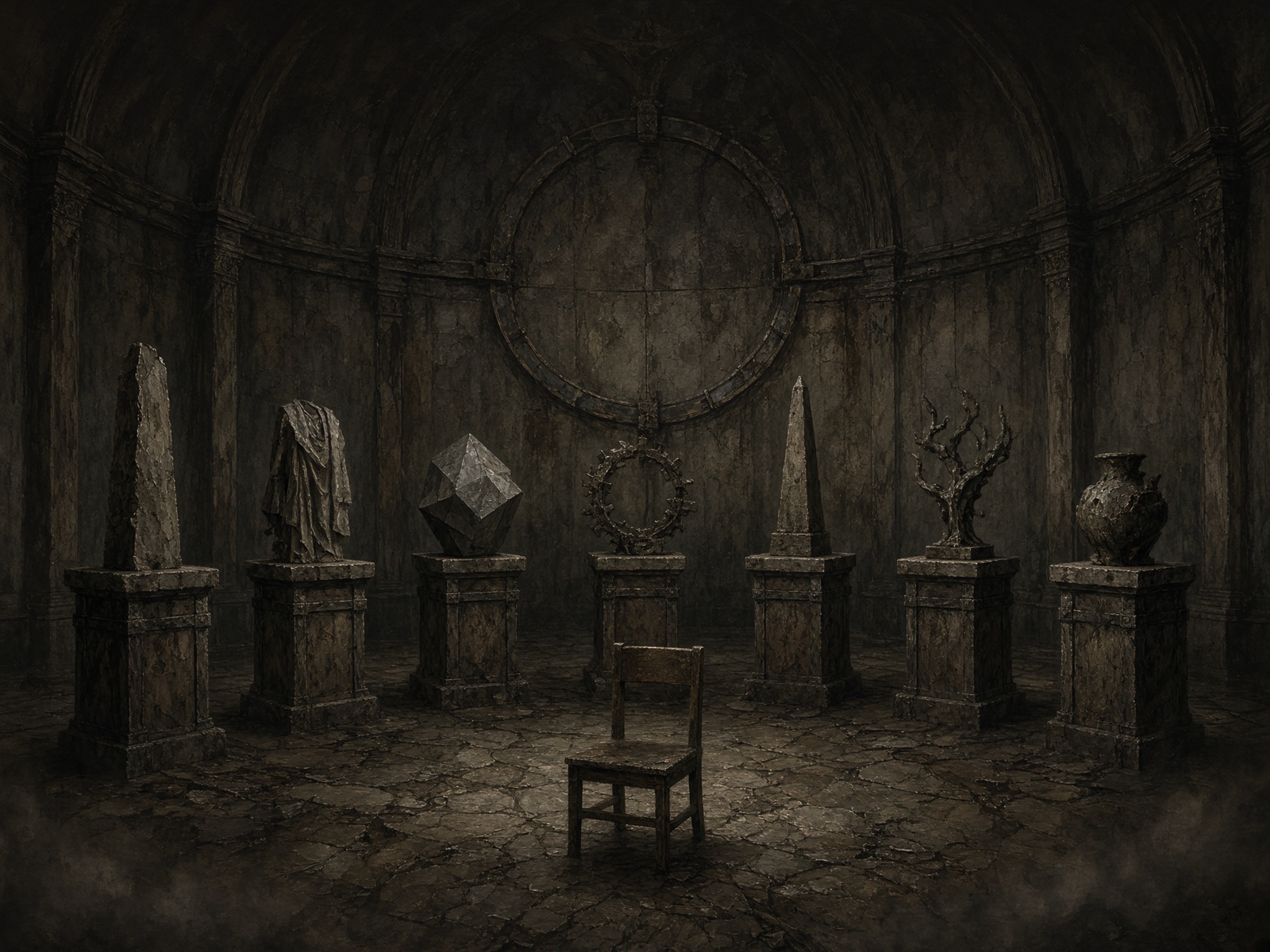
C2. The last room
- A. The chair — Sitting is becoming the Master.
- B. The seven objects — Echoes, not loot.
- C. Oris — Still a person. Keep them one.
Oris does not draw a weapon first. They quote you. The sentence you named to the first face is in their mouth, kindly, as a verdict. Behind them the chair is still a chair. Seven unfinished objects wait to be claimed as relics or left as evidence.
Do not stew this into “we save everyone.” The four endings are already named in C1. Pick one and live with it.
Oris is often right about the party’s hypocrisies. They are wrong that a throne follows from a diagnosis. Argue the ending, not the crime sheet. A PC who has named their sentence this book can Aid despite Pride’s old rule — Completeness dies here, or sits.
If they Unmake or take the Unfinished Vow, this can end when Oris is convinced: a social climax with steel as backup. If someone sits, they have to win the chair.
Never harm the first face. If the party attacks them, they are simply elsewhere. Kindness is remembered. Book 9 does not exist. Record the ending in one paragraph and stop.
At this band (mortal): A person and an argument. Steel is optional.
Only if the argument requires steel
extreme · 160 XP each
If they Unmake or Vow, this can end when Oris is convinced, not when HP is 0. If they take the chair, they have to win.
Oris of Ashenmere
solo 4
Humanoid, Unique
- AC
- 22
- HP
- 70
- Perc
- +13
- Fort
- +10
- Ref
- +7
- Will
- +13
Melee Strike +16, Damage 2d10+8
Ability DC 23
Quotes Inward Gazes as Strikes (mental). A PC who has named their sentence this book can Aid despite Pride’s old rule. Completeness dies here, or sits.
Seven fragments × 2
standard 1
Incorporeal
- AC
- 17
- HP
- 23
- Perc
- +7
- Fort
- +7
- Ref
- +4
- Will
- +10
Melee Strike +9, Damage 1d8+4
Ability DC 17
Not a hundred demons. One per Claimed or Bloodied Court, max three in play.
Treasure (major): 20 gp plus a permanent item of level 1.
Conclusion
There is no Book 9. Record the ending in one paragraph and stop. If they remain unfinished, that is the campaign’s last Inward Gaze, answered.
How this Court ends
Pick the ending the table actually reached. Victory breaks the Seal of The Master of Sins. Defeat and walking away do not. Then update the roster to the new levels.
Echoes to record
- Who sat?
- What was unmade?
- Which sentence did they name?
- Did Oris remain a person?
Bible notes for this Court
Working title: The Name You Will Not Speak
The Court: The Unwritten Court — no map until seven seals are broken
Seal: none. This is the lock.
Suggested length: 5–8 sessions
Requirement: Books 1–7 complete. No exceptions in the world. You may read this folder. The table may not enter.
This is the only book that cannot be started early. If the party tries, the road thins, the Grey Roads loop, and they find themselves back in Ashenmere with the iron band still short one mark.
Core theme
You cannot kill sin as an external enemy. The Master is the part of a person that, having looked inward, decides that what they saw is all they will ever be.
The seven Courts were not a prison. They were an argument. Book 8 is the rebuttal — or the agreement.
Main conflict
When the seventh seal breaks, the iron band grows a door. Not a metaphor. A thin, dark door that can be opened in any quiet place. Beyond it: the Unwritten Court, a palace assembled from the party’s unresolved choices.
Rooms are built out of:
- the title they took in Vaelspire
- the purchase they made in Goldwake
- the vow they kept or spent in Thornveil
- the life they envied in Narth
- the hunger they would not name in Marrowfen
- the slight they would not forgo in Cinderreach
- the gesture they postponed in Duskhaven
The Master of Sins waits in the last room. They are not a devil. They are not a god in the clerical sense. They were the first mortal to complete a full inward looking and survive it without flinching — and then they flinched in a different direction. They concluded that virtue is a costume people wear to avoid being known, and that a world honest about its sins would be a kinder world than one that lies about its saints.
They are brilliant. They are often right about the party’s hypocrisies. They are wrong about the ending that follows from that.
The conflict: having seen yourselves, will you become the new Master, unmake the Courts and live with the seeing, or try to do something the Master believes is impossible — remain unfinished on purpose?
How this book forces the characters to look inward
Every previous Inward Gaze returns as a person, a room, or a test that cannot be saved against.
The Master will not fight fairly at first. They will use the party’s own recorded echoes. They will praise the PCs’ worst consistent choice as “finally honest.” They will offer each character a throne in the domain of the sin they most refused to name.
The final Inward Gaze is not a question. It is a naming. Each PC must say, at the table, the thing they are. Not the sin as a brand. The specific sentence.
Then they must decide whether that sentence is a cell or a starting point.
The Master (GM-facing)
True name (do not speak it until the end, if at all): Oris of Ashenmere — yes, from the starting city. A scholar of the Keepers who walked all seven Courts alone, broke seven seals, and would not let the eighth door make them small again.
They wear no crown. They look like someone the party could have been if the campaign had gone slightly differently. Age them to match the table’s tone: not a cackling lich. A person who is finished.
Maera, if she lives, cannot enter with them. She failed Wrath. She will wait at the door. That is her dignity.
Endings (none of these are default)
- The New Master. The party takes the Unwritten Court. The seven Courts remain as engines. The world becomes honest and cruel. Powerful, dark, legitimate.
- The Unmaking. The Courts close. Sin does not vanish. People have to choose without a climate pushing them. Bittersweet. Some NPCs feel abandoned.
- The Unfinished Vow. The party refuses both throne and erasure. They leave the eighth door ajar — a place one can go to look inward without being ruled by what one sees. Hardest to run; most true to the campaign’s name.
- Failure. The Master’s thesis stands. The names that would not burn become the world’s weather. Legal. Bleak. Only if the table earns it.
Do not mix these into a compromise stew unless the table finds a specific third path you believe. Vague “we save everyone and learn a lesson” is the one ending this campaign should refuse.
Echoes — this is the whole book
If you did not record echoes from Books 1–7, stop and reconstruct them with the table before Session 1 of Book 8. The finale is a ledger, not a new dungeon.
Scaling
The party is high level by now, whatever path they took. Threats should be mythic but personal: not a hundred demons, seven rooms that know their names. The Master, in combat, should feel like fighting a version of the party that stopped apologizing.